Color Mania Quiz guess logos
- 4.2
- Rating
- 5.00M
- Installs
- Free
- Price
 Analysis by App-foxy
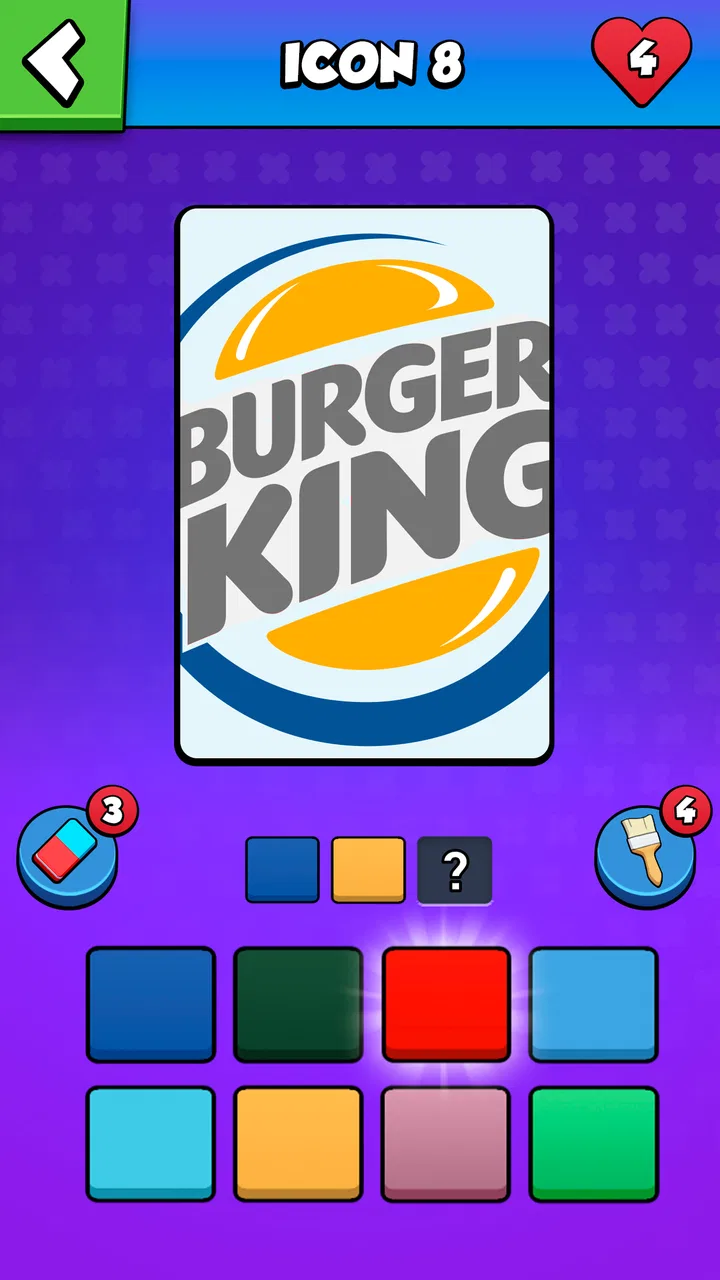
I picked up Color Mania Quiz expecting a quick logo game and found something that works best as a short, visual brain break rather than a deep trivia experience. The idea is simple: identify familiar brands from their visual marks, work through a large collection of logo questions, and try to improve your position on the leaderboards. That simplicity is exactly why it is easy to start, although it also explains why some players may eventually want more variety.
Developed by Unico Games, this free trivia game is aimed at anyone who enjoys recognition puzzles, brand quizzes, and casual competition. I would recommend it to people who like testing memory without learning complicated rules, especially when they want something they can play in spare moments. I would be less enthusiastic about it for someone looking for a story, detailed explanations, or a quiz built around broad general knowledge rather than visual identification.
How to decide whether this logo quiz suits you
The first question is whether you enjoy solving an image from partial information. Logo quizzes reward a different kind of knowledge from standard trivia. You are not usually recalling a capital city or calculating an answer; you are noticing shapes, colors, lettering, and the way a familiar symbol is arranged. That makes the game approachable, but it can also make a question feel unfair if you do not recognize the brand behind the image.
You May Also Like

 Blood Strike: 2.5 Anniversary
Blood Strike’s Loadouts Turn Every Drop Into a Tactical Gamble
A close look at Blood Strike’s custom loadouts: how fast access to signature weapons reshapes its battle royale rhythm, rewards preparation, and narrows the gap between fights.

 Pandora - Music & Podcasts
Pandora’s Music Is Easy to Start, but Harder to Recover
Pandora’s strength is its low-effort path from a seed to a station. Its weak spot is how much confidence it asks you to place in connection, setup, and quiet recovery.

 8 Ball Pool
 Is Built on Rivalries, Rematches, and Routine
A close look at the rivalries, rematches, shared routines, and unanswered safety questions that turn a quick pool match into a persistent mobile community.

 Samsung Music
’s Quiet Strength Is Playing What You Already Own
Its reach comes less from spectacle than from dependable access to a personal library. That simplicity is both the app’s strongest retention engine and its ceiling.

 AccuWeather: Weather Radar
AccuWeather Review: A Quick, Clear Forecast for Everyday Decisions
For everyday plans, the best forecast is the one you can understand quickly. AccuWeather makes rain timing, radar, and local conditions easy to act on, with a few trade-offs.

 Hill Climb Racing
Why Hill Climb Racing Still Turns Crashes Into One More Run
A tiny car, a bumpy hill and one more upgrade: Hill Climb Racing keeps resurfacing because its simple chaos makes every near-miss feel personal.
More From Our News Desk
View All News


In my experience, the strongest reason to try it is convenience. The game is free, rated for Everyone, and supports devices running Android 6.0 or later. Its current version is 3.1.0, so it is positioned as an accessible casual title rather than a demanding, hardware-heavy game. I could imagine using it while waiting for an appointment, during a short commute, or as a quick challenge shared with a friend.
Its popularity also gives a useful signal about its appeal: the game has passed five million installs and holds an average rating of 4.2 from roughly one hundred sixty thousand ratings. Those figures do not guarantee that every player will enjoy it, but they suggest that the basic format is easy for a broad audience to understand. I found that the low barrier to entry mattered more than any elaborate presentation. You can begin solving almost immediately.
Before choosing it, I would think about three practical criteria. First, do you want visual recognition or conventional question-and-answer trivia? Second, are you comfortable with a free game that offers purchases ranging from $1.99 to $49.99 per item? Third, will leaderboards motivate you, or will they make a relaxed puzzle feel more competitive than you want?
The learning curve is gentle, but the knowledge is selective
The opening experience is easy to understand because the central task does not need a tutorial-heavy explanation. A logo appears, and you try to identify it. That makes the game suitable for mixed-age play and for handing to someone who has never used it before. The Everyone content rating reinforces that family-friendly positioning.
However, “easy to start” should not be confused with “easy for everyone.” Logo familiarity depends heavily on personal habits, age, location, and exposure to different industries. A player who follows technology brands may move quickly through one group of questions, while another player may recognize food, clothing, or entertainment marks more readily. I liked that this creates natural conversation when playing beside someone else, but it also means the challenge is not perfectly consistent from one person to another.
A useful way to play is to treat the first guess as a memory exercise rather than immediately searching for help. Look at the dominant color, then the outline, then any remaining letter shapes. This three-step scan is more effective than staring at the whole image and hoping the answer appears. It also helps separate genuine recognition from a vague feeling that a logo looks familiar.
Another small technique is to say the possible answer aloud before committing. I found that speaking the name often exposes whether I actually recognized the logo or was simply associating it with a similar design. That matters in a game where several brands can share colors or visual styles. It turns a fast guess into a more deliberate decision without making the session feel slow.
Where the game wins over broader trivia apps
The biggest strength is focus. Many trivia games jump between history, science, sport, geography, and entertainment. That variety can be enjoyable, but it also creates uneven difficulty and encourages players to wait for subjects they know. Here, the visual theme gives each round a consistent identity. I always know what kind of attention the game is asking from me.
That focus makes it particularly good for social play. Two people can look at the same logo and explain why they chose an answer, even when one person is wrong. A normal fact quiz often turns into a private test of stored knowledge; a logo puzzle creates more room for recognition, debate, and shared memories. It is a nice option for a family setting where players have different strengths.
The format also suits short sessions better than many word-heavy quiz games. I do not need to settle in for a long campaign or remember a complicated progression system. I can solve a few questions, stop, and return later without feeling that I have abandoned a story or lost the thread of a larger task. That makes it a practical choice for people who want entertainment in small pieces.
The leaderboard angle gives the game an extra reason to revisit completed material. If competition motivates you, improving your position can make familiar questions feel worthwhile. I would not treat the rankings as the main attraction, though. The satisfaction comes primarily from recognition, while the leaderboard is more of a repeat-play incentive than a replacement for fresh content.
One of the less obvious advantages is that it can reveal how unreliable visual memory is. I often felt certain about an answer because the colors seemed right, only to discover that the shape belonged to another brand. Playing carefully made me more aware of how quickly I fill in missing details. That makes the game more interesting than a simple speed test, particularly when I resisted the urge to answer instantly.
Where another type of quiz may fit better
I would choose a broader trivia app when I wanted to learn facts rather than identify symbols. Color Mania Quiz is centered on recognition, so it is not the best match for someone searching for explanations, educational context, or a balanced rotation of subjects. If your goal is to practice geography, vocabulary, mathematics, or history, a subject-specific quiz will usually be more useful.
I would also look elsewhere if you prefer a quiet solo puzzle with no competitive pressure. The leaderboard concept is appealing for players who like comparing progress, but it may not matter to someone who simply wants a relaxing activity. In that case, a noncompetitive word puzzle or offline-style brain game could provide a calmer experience.
There is another trade-off involving familiarity. Because the challenge depends on knowing the logos, a player can be highly observant and still struggle simply because the brands are outside their everyday experience. That is not a flaw in the controls or the basic design, but it is important when deciding whether the game will feel rewarding. If you dislike questions that depend on cultural exposure, a general knowledge game with clearly stated subjects may feel fairer.
The game may also become repetitive for players who need constant mechanical variety. A focused logo quiz has a clear identity, but that identity sets a limit. If you expect narrative progression, action, elaborate customization, or a changing set of puzzle mechanics, this is not the right category. Its appeal comes from refining one recognizable format, not from transforming itself into several different games.
What free play and purchases mean in practice
The game can be downloaded for free, which makes trying it straightforward. That is important here because the format is highly personal: some players will enjoy identifying logos immediately, while others will know within a short session that the subject does not hold their attention. You do not need to make a financial commitment just to discover which group you belong to.
There are in-app purchases, with individual items priced from $1.99 up to $49.99. I would approach those purchases carefully and decide first whether they improve the experience I actually want. If I were playing casually, I would treat the free entry as the main value and avoid spending simply because I had become stuck on a difficult question. A purchase can remove friction, but it cannot make an unfamiliar logo personally recognizable.
My practical advice is to set a limit before playing, especially if younger family members use the device. The Everyone rating describes the content, not a personal spending plan. Keeping purchases intentional helps preserve the main advantage of the game: it is easy to sample without turning a few spare minutes into an unplanned expense.
The cost of switching away is low because the game is built around a familiar, widely understood concept. If it does not suit you, moving to a general trivia title, a word game, or a visual puzzle does not require learning a complicated system first. That makes this a low-risk experiment, but it also means the game has to earn repeat sessions through the quality of its questions and the satisfaction of recognition rather than through a large commitment.
A realistic everyday way to use it
Imagine waiting while a friend finishes an errand. I would open the game, solve a handful of logos, and use the uncertain ones as conversation starters rather than treating every missed answer as a failure. A friend might recognize a symbol from shopping or work, while I might know one from technology or entertainment. That makes the session more social than scrolling through a feed, but still light enough to stop at any moment.
For solo play, I would use a two-pass method. On the first pass, answer only when recognition is reasonably strong. On the second, revisit the uncertain images and inspect color, spacing, and letter fragments more carefully. This prevents one difficult logo from interrupting the rhythm of an entire session and turns mistakes into a memory aid. The method is especially useful if your aim is to improve rather than simply guess quickly.
Parents or relatives could also use it as a casual intergenerational activity, with one caution: do not assume that a younger player knows the same brands as an older player. Let each person explain their reasoning instead of judging speed alone. That keeps the game inclusive and makes the differences in experience part of the fun.
Who should install it, and who should skip it
I think it is a good fit for casual players who enjoy visual puzzles, brand recognition, and short repeatable sessions. It is also worth considering if you want a family-friendly trivia game that can be understood without a long explanation. The free price, broad age rating, and modest operating-system requirement make it easy to test on a wide range of compatible devices.
I would recommend it less strongly to dedicated trivia fans who want detailed answers or a wide educational scope. It is not designed to teach why an answer is correct, and its logo-centered format will not satisfy someone who wants every round to cover a different subject. I would also skip it if leaderboards and recognition-based challenges do not appeal to you, because those are central to the reason for returning.
Players who are sensitive to purchase prompts should try the game with a clear boundary in mind. The free download is convenient, but the available purchase range means the experience deserves the same spending awareness as any other free-to-start game. For me, that is a manageable limitation rather than a reason to reject it, provided I keep the focus on solving rather than unlocking every possible advantage.
My recommendation after comparing the alternatives
Color Mania Quiz makes the most sense when you want a focused logo challenge, not an all-purpose trivia course. Its strengths are immediate play, visual recognition, family-friendly accessibility, and the option to chase leaderboard progress. Its weaknesses are equally clear: the challenge depends on personal familiarity, the format may feel repetitive, and players seeking explanations or broader subjects will find better choices elsewhere.
With an average rating of 4.2 and around twenty thousand written reviews, it has attracted substantial ongoing attention, but I would still judge it by your preferred kind of challenge rather than by popularity alone. The right question is not whether logo quizzes are generally popular; it is whether identifying visual marks sounds more enjoyable to you than answering conventional fact questions.
My final advice is to install it if you want a quick, approachable game for spare moments or shared guessing sessions. Start without spending, use the visual inspection techniques above, and see whether the satisfaction of recognizing a logo keeps you coming back. If you want deep learning, varied subjects, or a more peaceful puzzle without competitive framing, choose another category instead. For the specific job of turning brand recognition into a compact trivia game, I found it easy to recommend—with the understanding that its narrow focus is both its main appeal and its main limitation.
FAQs for Color Mania Quiz guess logos
01What is Color Mania Quiz: Guess Logos?
Color Mania Quiz: Guess Logos is a casual trivia game where you identify famous brands by looking at colorful logo designs. The game presents logo-based challenges that test your visual memory and general brand knowledge. It is designed for short play sessions, making it suitable for relaxing at home, passing time while traveling, or competing with friends and family.
02How do you play Color Mania Quiz: Guess Logos?
The basic gameplay is straightforward: a logo or a partially revealed logo appears on the screen, and you must select or enter the correct brand name. As you progress, the questions can become more difficult, with less obvious designs or fewer visual clues. Correct answers help you advance, while hints may be available when you are unsure.
03Is Color Mania Quiz: Guess Logos free to download and play?
The game can generally be downloaded without an upfront purchase, but the exact business model may depend on the Android or iOS version available in your region. Free versions of logo quiz games commonly include advertising, optional hint purchases, or other in-app items. Before downloading, check the store listing for current pricing, advertisements, and in-app purchase information.
04Can children play Color Mania Quiz: Guess Logos?
Children can usually enjoy this type of logo trivia game because the controls are simple and the gameplay does not require advanced gaming skills. However, parents should review the app’s age rating, advertising, and in-app purchase options before allowing younger players to use it. Some questions may also feature brands or products that are more familiar to adults.
05Does Color Mania Quiz: Guess Logos work offline?
Some parts of the game may work without an internet connection after installation, particularly if the logo questions are stored locally on the device. Nevertheless, advertisements, updates, leaderboards, cloud features, or certain hint systems may require online access. If offline play is important to you, test the game in airplane mode and review the developer’s latest store description.
Pros
- Simple gameplay that is easy to understand from the first question
- Short quiz rounds make it suitable for quick breaks
- Recognizable logos provide a satisfying sense of familiarity
- Progressive difficulty keeps later levels more challenging
- Lightweight design should run smoothly on many devices
Cons
- Some logos may be difficult to identify without brand knowledge
- Repeated logo styles can make certain rounds feel similar
- Hints may be limited unless earned or obtained through rewards
- The game may become repetitive after extended play sessions
- Ad interruptions can affect the flow between quiz levels

Color Mania Quiz guess logos
Gallery